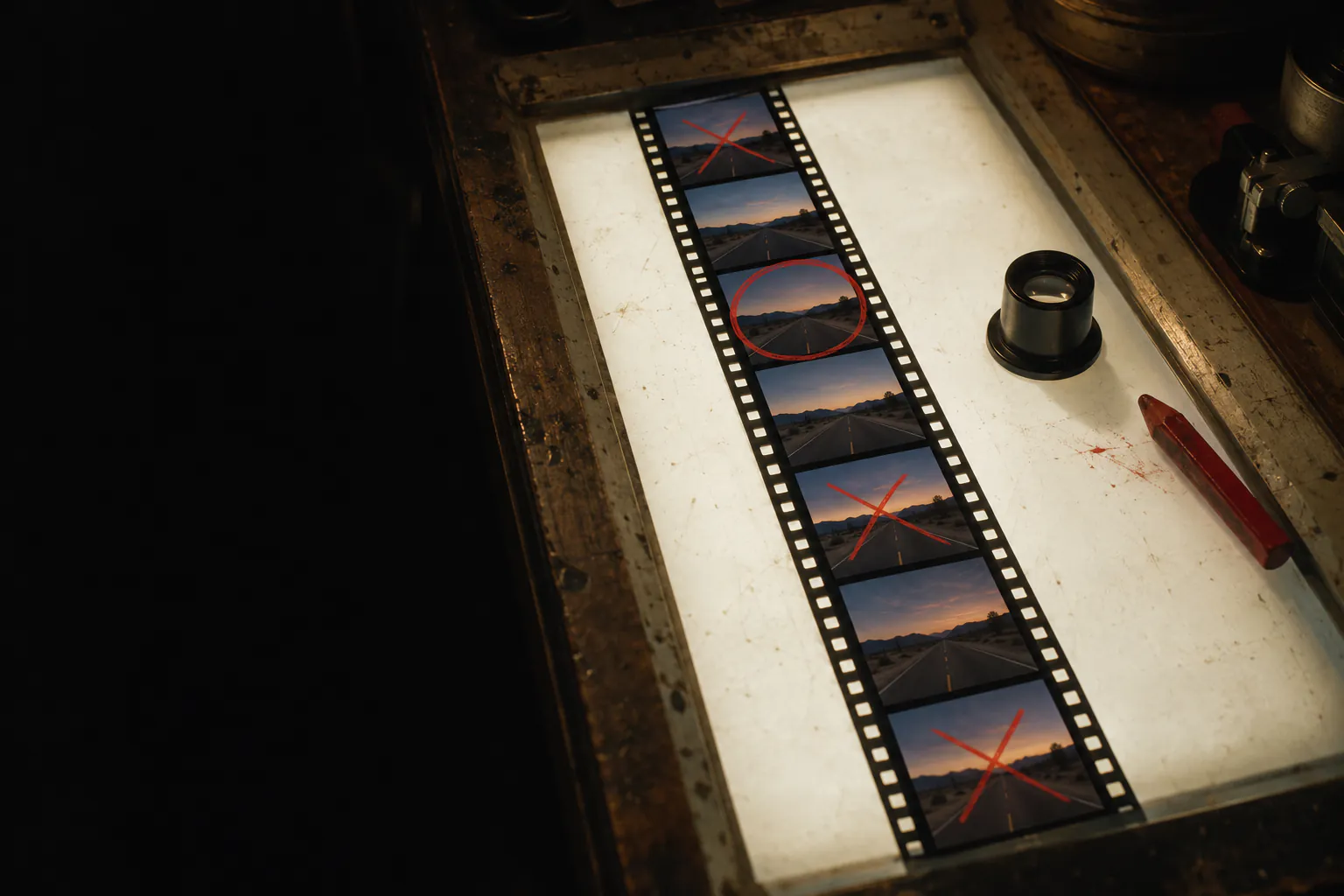
Baklot tells you when a take is no good.
It turns a written brief into a short film, and refuses to ship any shot that hasn't been proven to show what it was asked to show. When it can't tell, it stops and waits for a person instead of guessing.
Anyone can open an account with an email address and look around. Productions run once the account is approved.

Every shot is judged department by department.
You've had a shot that looked right as a thumbnail and fell apart on the timeline. Each department here looks for one way that happens, and writes its own verdict on the take.
| Department | Looks for | Verdict |
|---|---|---|
| Technical | Frame count, frame rate, frame size and audio, measured with ffprobe against what the shot asked for. | Pass |
| Motion presence | Enough movement to read as a living picture. A still frame dressed up as video fails. | Pass |
| Shot continuity | One unbroken take. A clip that jumps partway through fails. | Pass |
| Camera stability | Whole-frame jitter and warp, kept apart from the subject's own movement. | Pass |
| State sequence | Each subject moves through the states the shot declared, in order. | Pass |
Each verdict is reported on its own, so when a shot fails you can see which department failed it.
A gate only gets a vote once it has caught the fault it looks for.
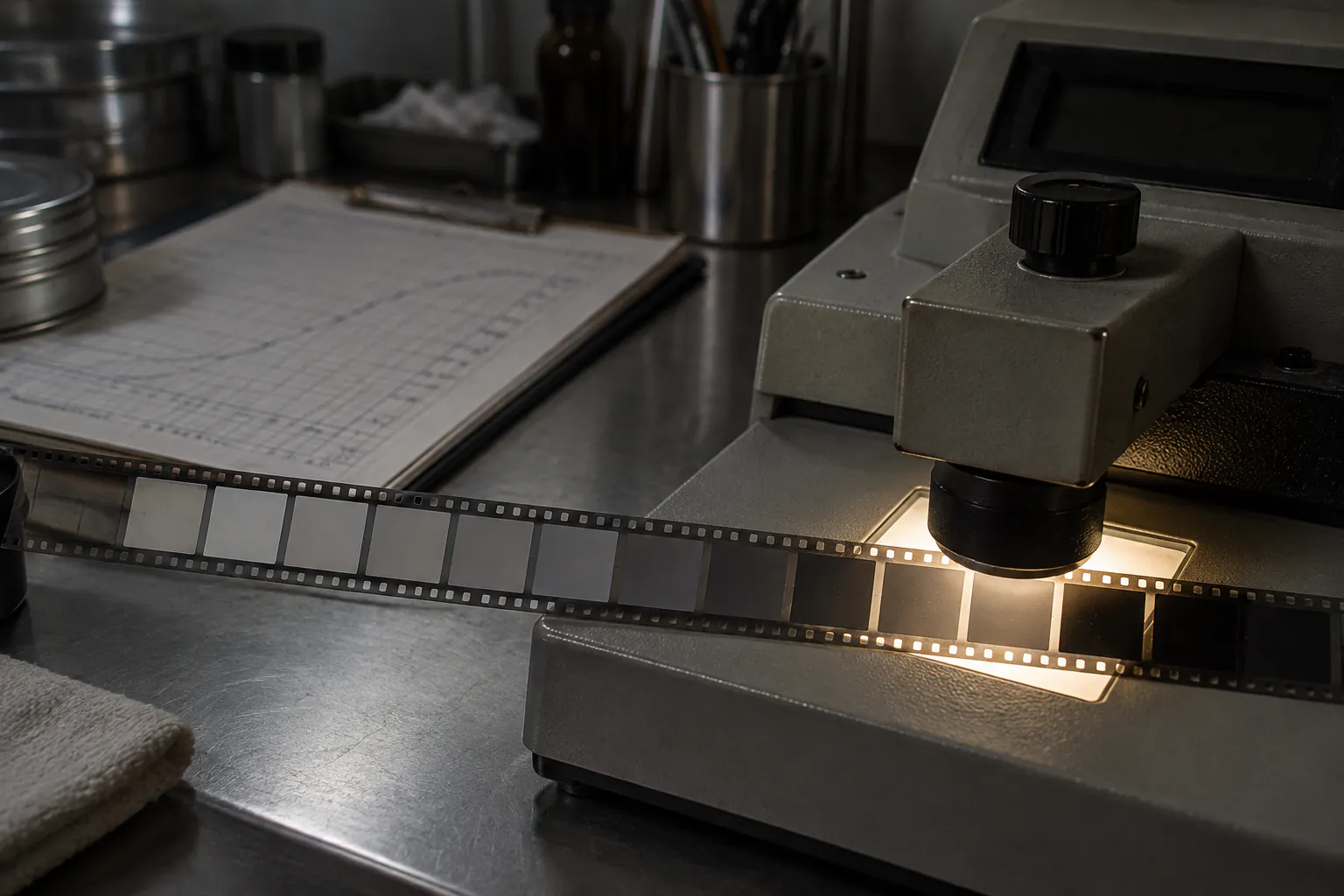
Every gate is tested on control clips: a real clip known to have the fault, and a real clip known to be clean. To arm, it has to fail the first and pass the second.
| Known fault | Fail |
|---|---|
| Known clean | Pass |
The worker image runs those controls while it is being built, and the build stops unless the gates arm. Five local gates arm there. Gates that depend on an outside vendor stay unarmed, so a shot they would have judged holds for a person instead of taking their vote.
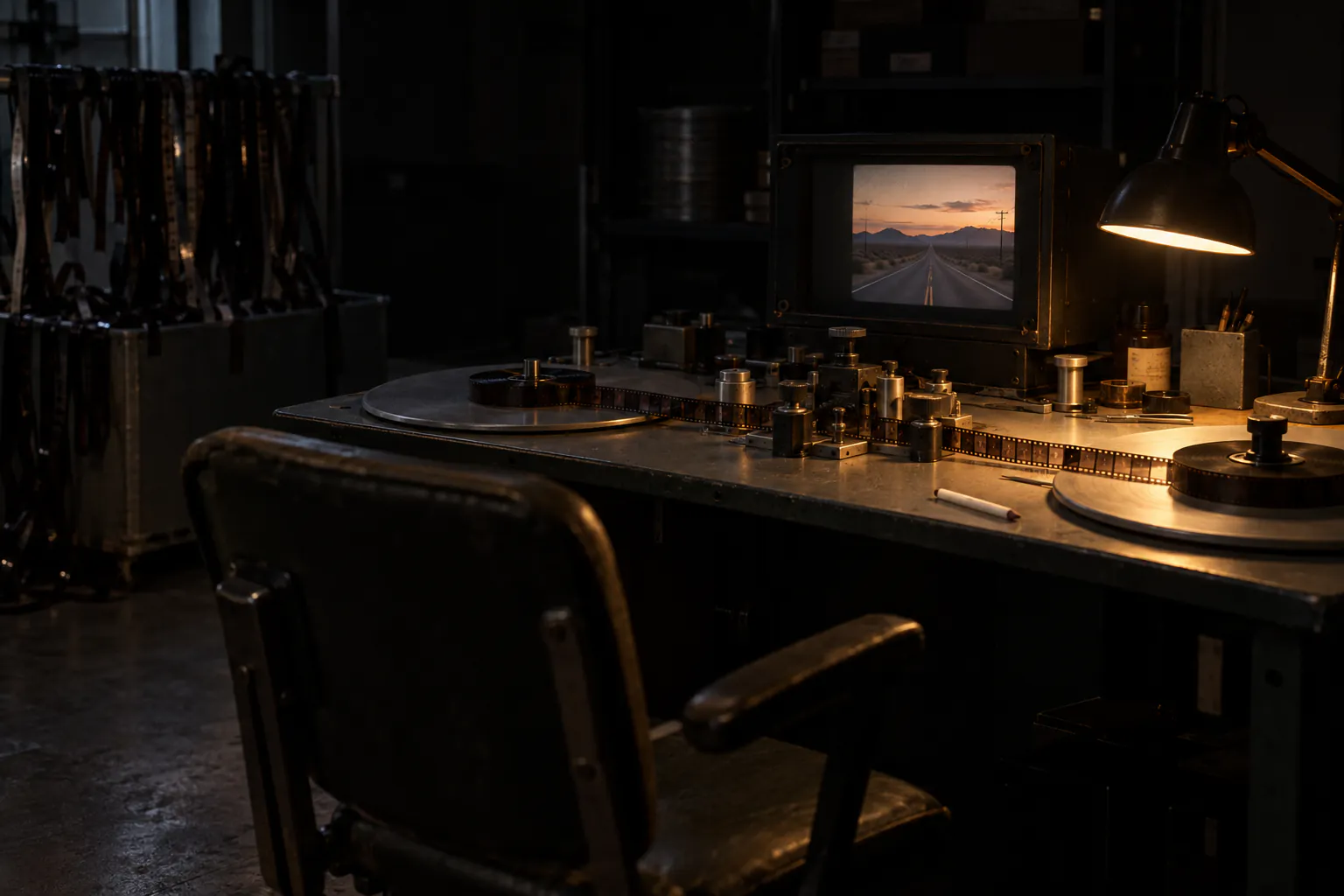
When it can't certify a shot, the production stops.
It waits at a checkpoint until a person has looked at the shot and made the call.
It says no before it spends.
Each production has a spending cap. A call that would take it over the cap is refused before the call is made, not after.
A missing key is refused the same way, before any paid generation, and the refusal names the key and the gate that needs it.
missingForEveryProduction: ["Fal"]Productions run on your own vendor accounts and are billed to them directly. Your keys are sealed when you save them and never shown again. Saving them through the write-only form keeps them out of your chat transcripts.
Every verdict names the exact file it judged.
Media is stored under a fingerprint of its own bytes, and each verdict is bound to the bytes it judged. Change one frame and it is a different file. The old verdict stays with the old file.

- Cut
- 14 Oct 2026
- Picture
- 1920 × 1080 at 30 fps
- Length
- 150 frames
- Video
- h264, with audio
- Spend
- 56 cents
- Fingerprint
sha256:499038dd…- Checked
- ffprobe, against the manifest
How access works.
- Sign in. Use your email address at mcp.baklot.ai. A single-use code opens the account.
- Look around. A new account can browse from the first sign-in.
- Wait for approval. Productions are refused until the account is approved.
- Save your vendor keys. Productions are billed to your own vendor accounts. Each key is sealed when you save it.
- Connect your assistant. Claude or ChatGPT writes the brief and sends it to Baklot.